Observed currents from the Gulf of Finland – description of the ADCP dataset (2009–2015)

Vol. 61., No. 1, 2026

Abstract

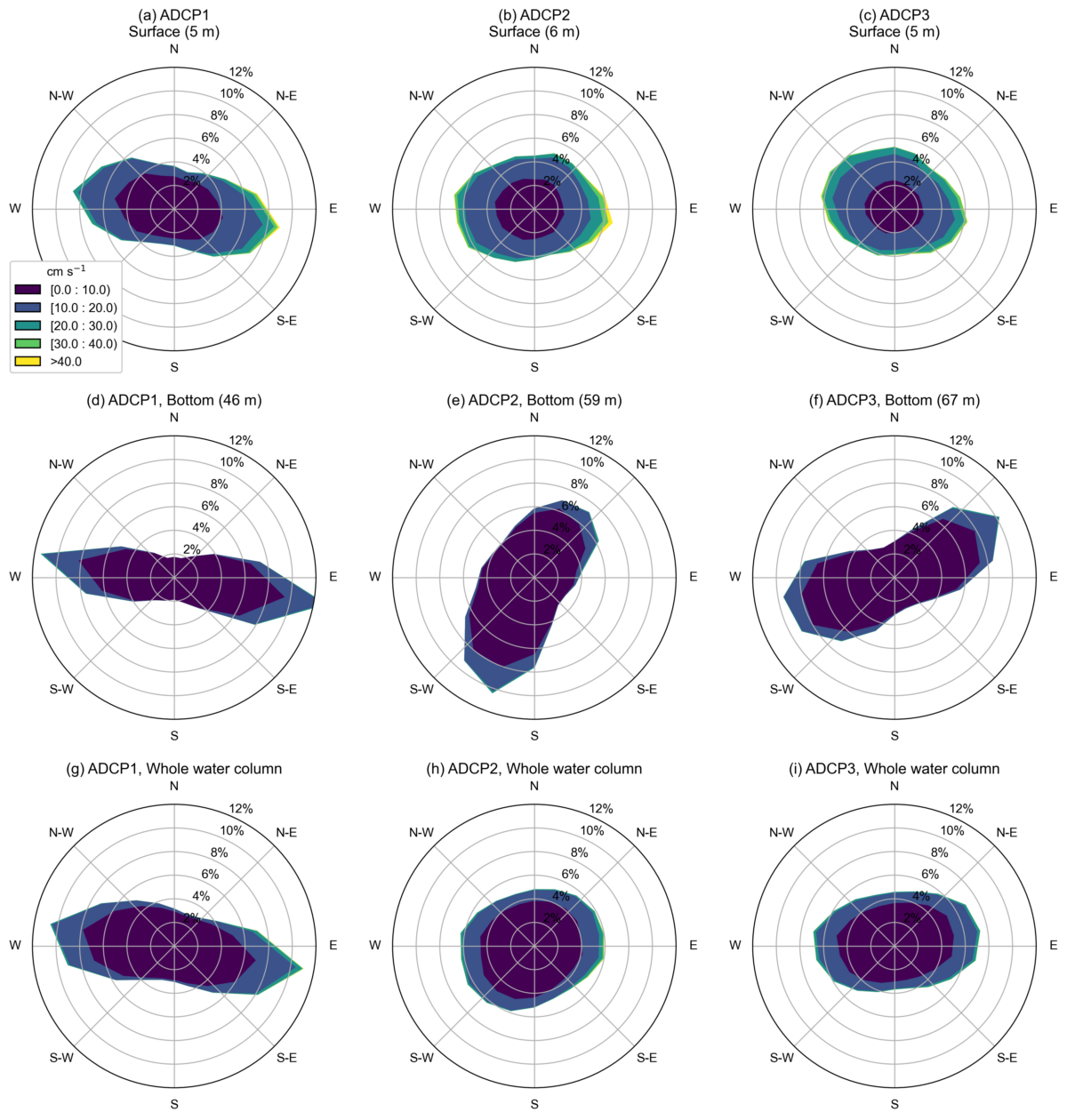
The Gulf of Finland (GoF) in the Baltic has been extensively studied for the last three decades. To further support the work in this area, we present the Finnish Meteorological Institute’s (FMI’s) acoustic Doppler Current profiler (ADCP) dataset from the GoF covering years from 2009 to 2015, published in FMI’s Research Data repository. This dataset includes simultaneous measurements from up to three different sites covering ice-free seasons in years 2009–2012 and continuous measurements from April 2013 onwards. In this paper, we give an overall description of the ADCP dataset with detailed information on the metadata and deployment information to facilitate the future use of the measurements. In addition, we present a brief description of the characteristics of the observed currents. The measurements improve understanding of the GoF circulation patterns, showcasing the large variability and vorticity of the currents in the area while catching many events of strong currents due to the relatively long measurement time series.
Evaluating accuracy of Baltic Sea wave forecasts

Vol. 59, No. 1, 2024

Abstract

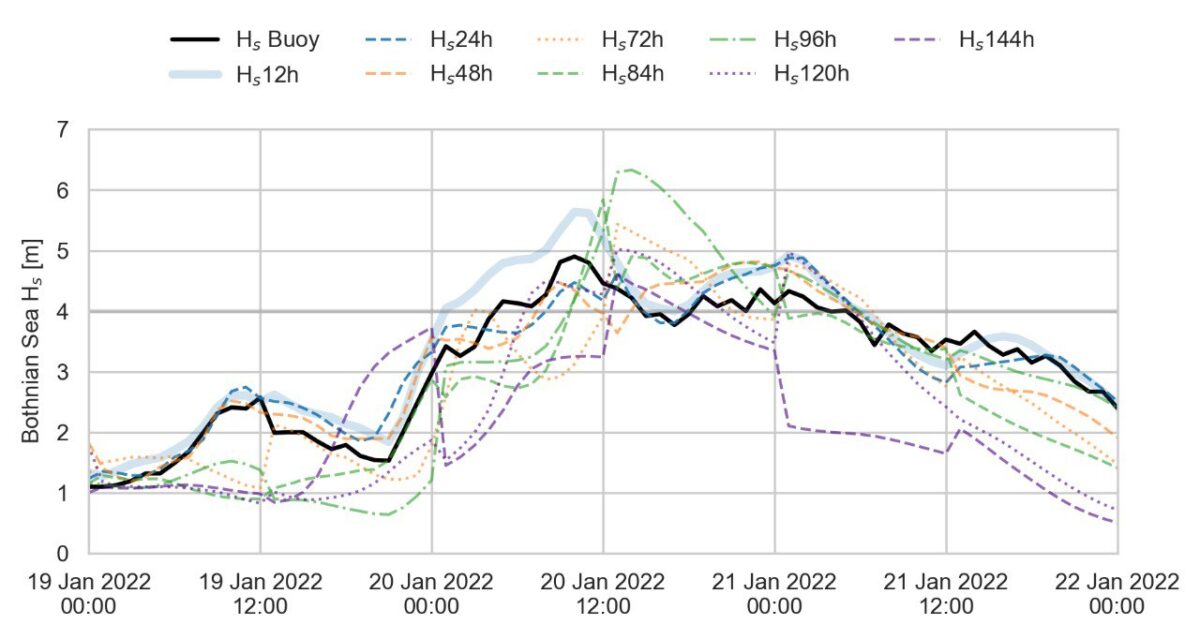
Accurate prediction of surface waves in the Baltic Sea is crucial for enhancing the safety and efficiency of maritime transport. Over the years, the accuracy of wave forecasts in this area has seen considerable improvement and has proven reliable for forecast windows of 2 to 3 days. However, the issuance of warnings for marine operations often requires longer forecast ranges. This study investigated the forecasting accuracy over a longer time frame of 4 to 6 days and assessed its effectiveness in issuing warnings for moderate and severe wave conditions. To achieve this, we have evaluated the high-resolution wave forecasts for the Baltic Sea available at the Copernicus Marine Services Monitoring Forecasting Centre (BAL MFC) against buoy and altimeter data. Our analysis demonstrates strong agreement between the model predictions and the observed data for shorter forecast ranges. Nevertheless, starting from the third day of the forecast, there is a growing bias in the values of significant wave height. The underestimation becomes more pronounced on the last day of the forecast, with significant wave heights underestimated by approximately 10% compared to buoy data and 20% compared to altimeter data. Part of this underestimation was addressed to the forecast system setup that used the combination of Harmonie and ECMWF winds. As the wind-wave coupling was tuned to Harmonie winds, which without tuning lead to overestimation of significant wave height, it affected negatively the longer forecasts using ECMWF wind forcing. To access the forecast ability to predict high-sea wave events, a 4-meter threshold was employed, aligning with Finnish Meteorological Institute wave warning. The results of two cases show that forecasts 84, 96, and 120 hours in advance provide valuable insights for effective warning issuance.